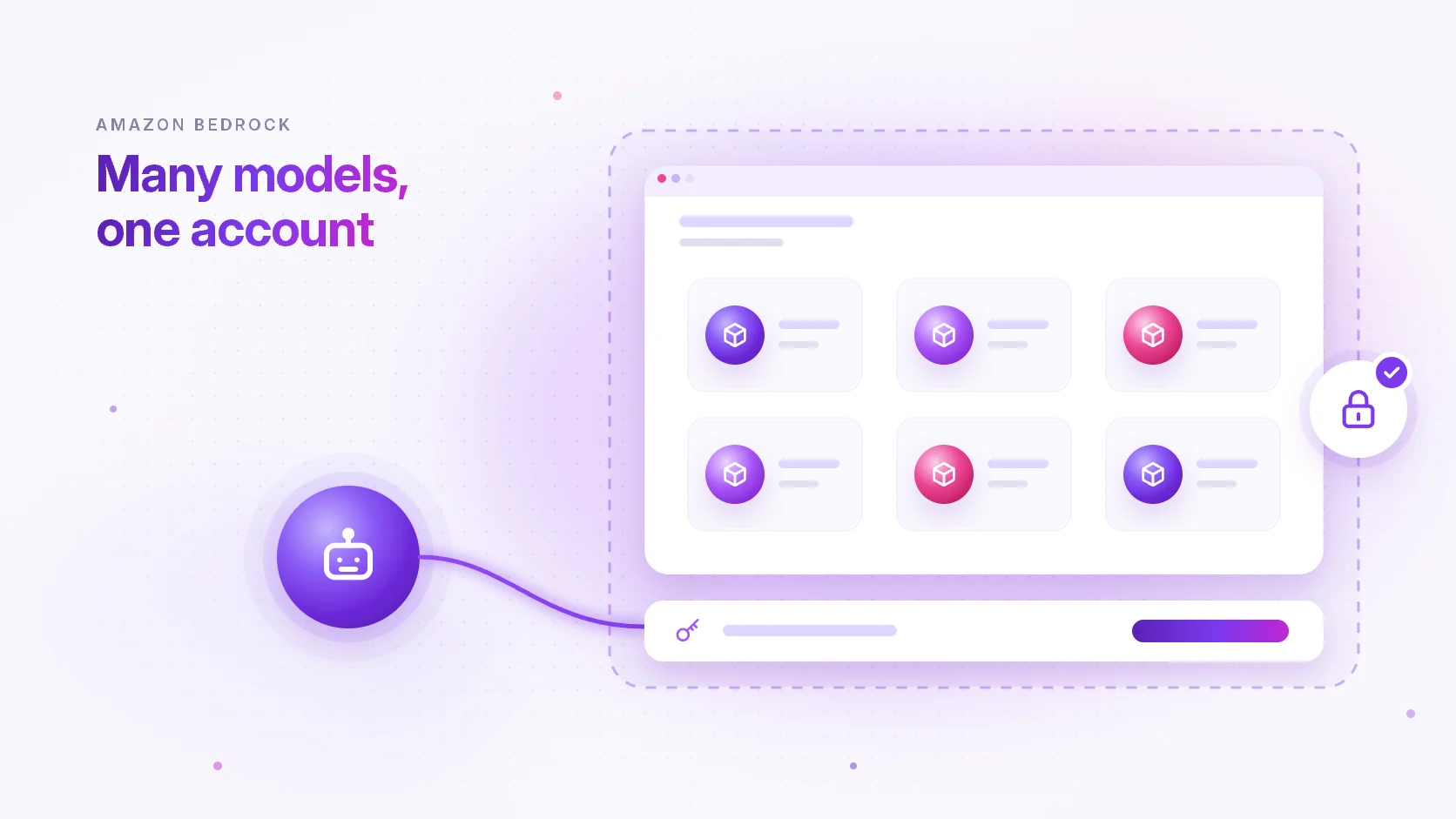
Most AI features start the same way: an app calls one model provider's API, with a key stored in an environment variable, from somewhere outside the AWS account where everything else runs. It's the fastest way to ship a first version.
It's also where the hard questions start. Who can use that key? Where do prompts and responses go? How do you audit it, put it behind your network controls, or switch models when a better one ships? Amazon Bedrock answers those questions with tools you already use.
Choice without rewrites
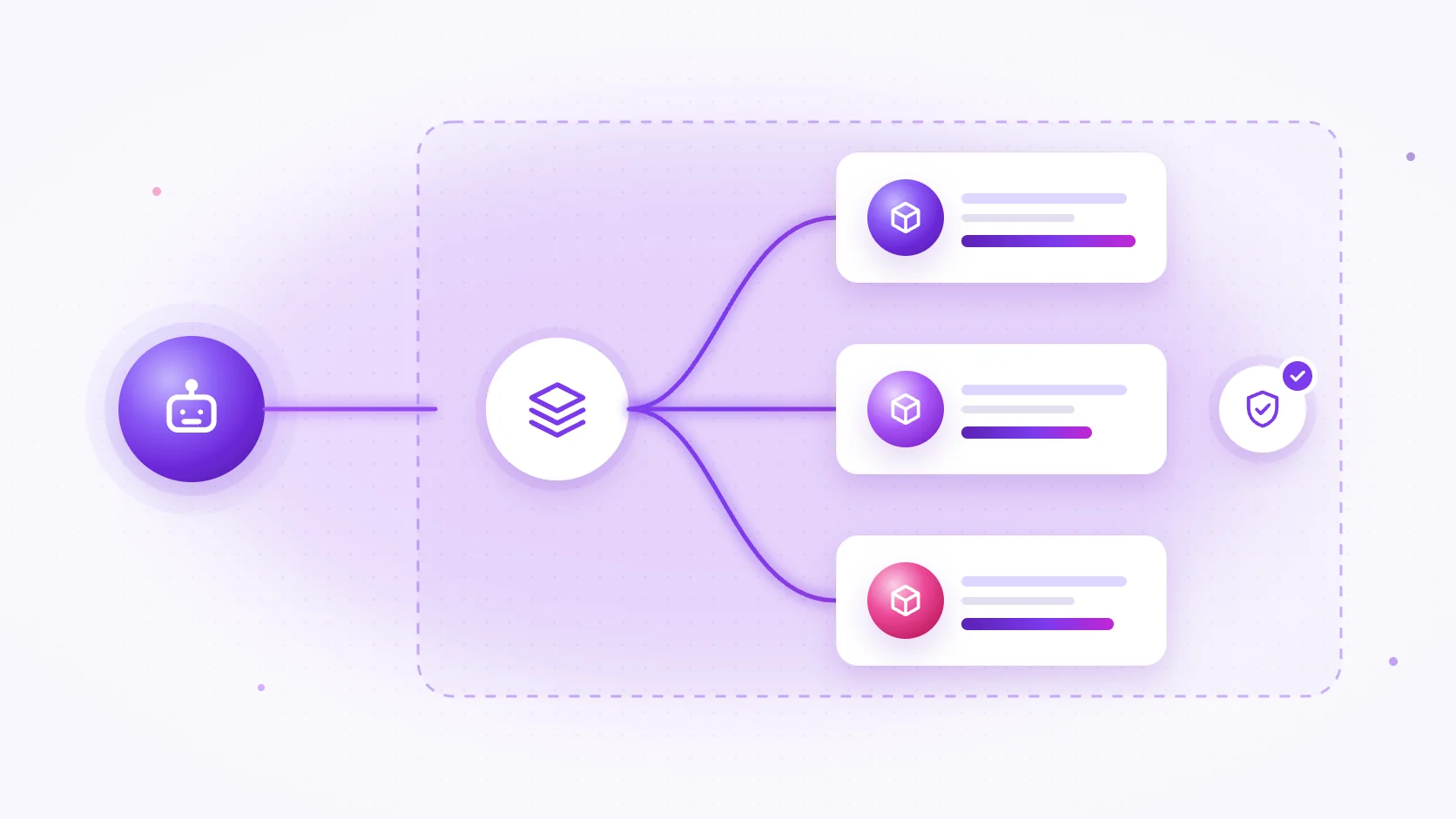
Amazon Bedrock gives you more than 100 foundation models from leading providers through one service. Its Converse API is one consistent interface across models that support messages, so, in AWS's words, you can write code once and use it with different models. Trying a new model, or using a smaller one for simple tasks, becomes a configuration change instead of a rewrite.
Your data stays in your account
Bedrock runs in your AWS account and Region. AWS's documentation says model providers don't have access to Bedrock logs or to customer prompts and completions, and that Bedrock doesn't share your content with model providers. For teams answering customer security questionnaires, that's a much shorter answer.
Security you already run
- Access with IAM. The same identities, roles and policies you use for everything else decide who and what can call a model.
- Private connectivity. With an interface VPC endpoint through AWS PrivateLink, applications reach Bedrock as if it were in your VPC, with no internet gateway needed.
- Audit by default. AWS CloudTrail captures Bedrock API calls, so model use shows up in the same audit trail as the rest of your account.
- Compliance coverage. Bedrock appears on AWS's FedRAMP services-in-scope list, including the High baseline in AWS GovCloud (US). Check the current list for the programs you need.
Building blocks you'd otherwise build yourself
Bedrock Guardrails adds configurable safety and privacy controls that work across models. Knowledge Bases manages ingestion, indexing, storage and retrieval for retrieval-augmented generation. Model evaluation compares candidates on your own prompts. For work that doesn't need an instant answer, batch inference is priced 50% lower than on-demand for select models. And it all lands on one bill: Bedrock usage is billed through your AWS account.
What the move looks like
The move is usually smaller than teams expect. We inventory where the app calls a model and what data it sends, pick the Bedrock model that matches today's behavior, switch the client to the Converse API, and run old and new side by side on real prompts before moving traffic. IAM roles replace the stored key, and logging and guardrails go in on day one.
Talk to our team if you're calling a model provider directly today, and we'll map what it would take to move to Amazon Bedrock and what you gain on security, cost and model choice.